Tyler Strikes Again, and a Long Tribute to Aerosmith.

On August 2, 2024 Aerosmith announced they would retire from touring, due to an irreparable vocal cord injury sustained by one Steven Tallarico. The ensuing year saw Aerosmith’s shambolic reputation restored with the power of hindsight, and a triumphant, albeit appropriately brief, return to the stage on July 5. During that evening’s Black Sabbath tribute concert, Tallarico roared through Led Zeppelin covers for an appreciative crowd, received glowing reviews and got to bask in one final spotlight. Like so many things Aerosmith (and Tallarico) have had throughout the years, it fell short of what they deserved (a farewell tour and mass adulation from their most rabid of fans), but was, at least, a fond farewell and a moment of glory for the much-maligned and self-inflicted-wounded band. Tallarico got to go out on top.

I sat down to write this diatribe as the beginning of a sort of series of tributes to the band, going back through their catalog and praising the Boston quintet for their (mostly) underrated and enduring contribution to the world’s greatest art form, rock n’ roll music. I cracked my knuckles, then navigated swiftly to Aerosmith’s Apple Music page. That’s when I saw this:

Wait, what? They just so happened, on the day that I intended to do my level best to enshrine them as Mt. Rushmore of Rock figures, to release a preview for a new EP, co-performed with YUNGBLUD (who I admittedly do not recognize at all), in 2025? At first, I thought I had clicked on the wrong artist by mistake. I gave myself a moment to absorb what I was seeing. Was it real? Maybe it was just a remix of some old Aerosmith music, highly skippable and largely inconsequential? My Only Angel. Maybe some 2025 remix of the most triumphant of power ballads from 1987’s Permanent Vacation? I had to know. It’s probably nothing, but of course, I listened to it immediately. Goddamit, Tallarico. Here comes Steven Tyler.

It’s new material. It’s awful. It’s auto-tuned and embarrassing.

Be that as it may, I am not new to this art of Aerosmith apologetics. Despite the band’s own best efforts to embarrass and demean themselves, I will not be swayed. I intend to carry on with my planned tribute, and I intend also to never hear My Only Angel ever again. I carry on in the hopes that, after November 21, 2025, Aerosmith makes no further efforts to… I guess.. revitalize their image, and will let this (which they are certain to read) stand as the absolute love letter I originally intended it to be. To put it bluntly: please, do not perform that new song live. Ever.

Now, as Steven Tyler would say: Good evening, people, welcome to the show…

I will not be including compilations in this career retrospective. Still, I will probably mention the outtakes contained on those compilations as songs that stand alongside the music that was included on albums, or as suggestions of what Aerosmith could have included instead of what they chose to include. Still, if I actually wrote a record review for every single iteration of Greatest Hits that the band released, I’d be practicing a demonic level of redundancy.

Aerosmith – January 5, 1973
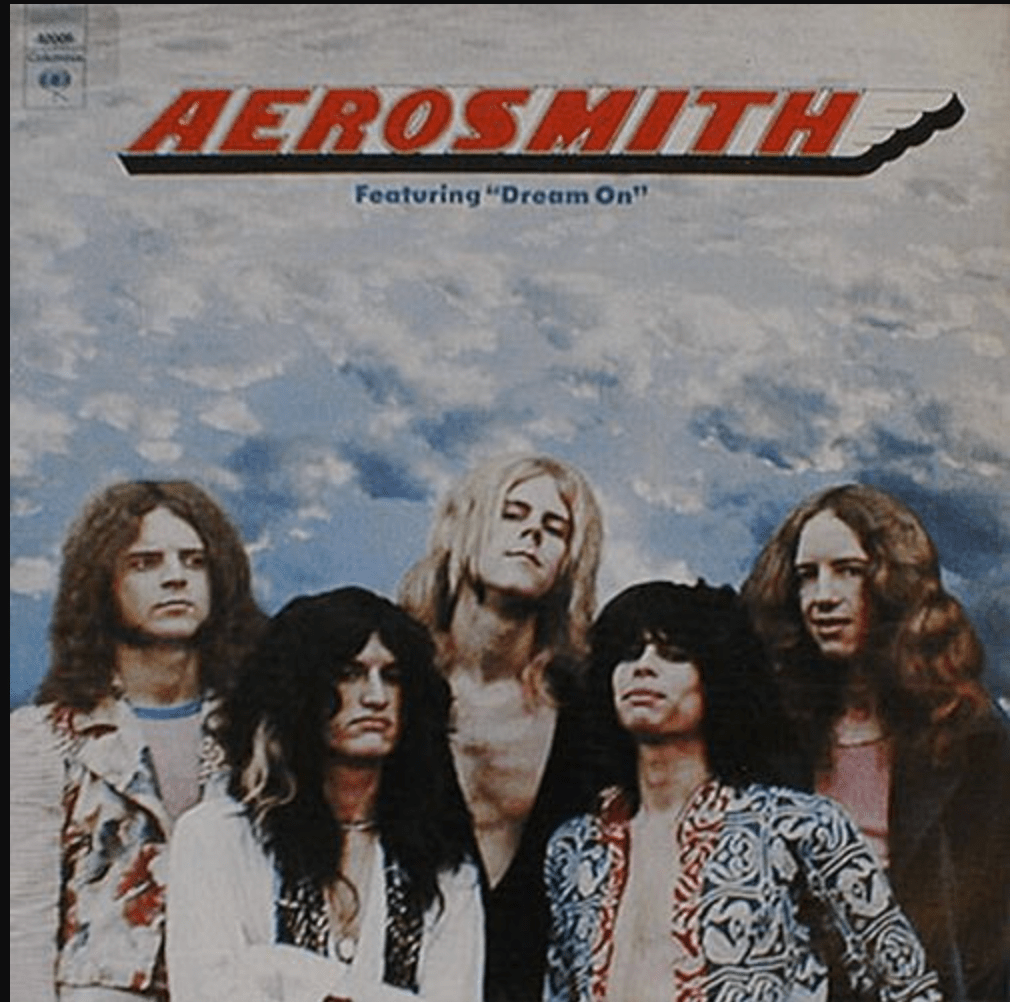
Take a long, lingering look at that album cover. For the next decade of Aerosmith’s existence, this would be as bright and colorful as things would get. This is the photo of a band in their “fake it ’til you make it” era. It isn’t hard to understand why music critics at the time wrote the band off as second-rate Rolling Stones rip-offs; it was low-hanging fruit to attack Steven Tyler’s lips and Joe Perry’s disheveled indifference, but aesthetics aside, the critics (as they almost always do) missed the point.

Aerosmith was never anointed in the way The Beatles, Stones, or Led Zeppelin were. It is true that the press also savaged Led Zeppelin, but Zeppelin had the privilege of containing hip and already well-known members. The press levied at Led Zeppelin didn’t matter. Aerosmith spent 2 years bashing these songs out as unknowns in Boston’s Orpheum Theater, absolutely a garage band in every sense of the word, with the exception of the fact that they couldn’t afford a garage. A decent write-up might have helped Aerosmith considerably, although it ultimately turned out that Aerosmith did not need the press’ help. This music is not for the hip London swingers, it’s for the kids.

I don’t think I could describe the vibe on Aerosmith better than Dan DeWitt, who reviewed the record for Creem Magazine, back in ’73: “We all had to suck somebody’s tit, and what a bunch of tits these chubby-lipped delinquents have gone after.”

The record is raw in a way the band would never recapture, and Steven Tyler’s voice is intentionally nasally. In his autobiography, Tyler mentions that he did like the way his natural voice sounded, so he adopted this affect for the recording of his debut album. If you’ve heard “Dream On”, you know precisely what I’m talking about. I tend to believe that the rawness of this album went the way of Steven Tyler’s vocal affect because Aerosmith were too ambitious to not find a way to be grandiose in the future. I’ve got no beef with grandiose, why would I be an Aerosmith fan otherwise, but I wish more of this vibe and sound permeated more of Aerosmith’s later catalog.

“Make It” is the opener and the grungiest track on the record. Producer Adrian Barber correctly puts Joey Kramer’s drums up front and thunderous, and the lyrics are basically the narration of the photo on the cover. “Make it, don’t break it, if you do it’ll feel like the world’s coming down on you… You know that history repeats itself, what you’ve just done, so has somebody else.” Aerosmith is not trying to innovate; they are just smashing out some music. I do not know why the group chose to sandwich “Somebody” onto the record in between this magnificent song and “Dream On” (I would have chosen “Major Barbra”, an outtake that later appeared, oddly, as a studio track smack-dab in the middle of Live Classics!), but it is likely due to Tyler’s presumed affection for the song, as it was originally written and performed by Chain Reaction, his first group.

“Dream On” stands as Aerosmith’s magnum opus. In 2025, it is absolutely overplayed, Aerosmith’s Stairway to Heaven (as in, should be forbidden in guitar shops), but if you can bring yourself to remember the first time you heard it, it is jaw-droppingly great. Likely, you didn’t realize it was Aerosmith (due to Tyler’s vocal affect and the fact that you almost definitely heard “Walk This Way” first).

“One Way Street” is fine, another ode to the struggle of trying to make it as a band. Actually, it’s kind of odd how many of the songs on this record are about Aerosmith’s drive to become rock stars, and how dirty and nasty the work is. The band, particularly Tyler, has always understood that if you pretend to be something long enough, you become that thing, and they have always ran at full speed towards being grand rock stars, so the confession that they are not is unique and fleeting.

“Mama Kin” was so beloved by the group that Steven Tyler got it tattooed on his arm, and was so beloved by others that none less than Guns N’ Roses covered it 10 years later, and it’s a solid slab of hard rock, but nothing particularly unique in 1973.

“Write Me A Letter” sounds like a Joe Perry riff, but it is not. “Movin’ Out” is a Joe Perry riff, the first that he contributed to Aerosmith, and his sole writing credit on the record. Yet another lyrical ode to the struggle of a fledgling band, “Movin’ Out” stands above the other similarly-themed songs because of the middle breakdown (“level with God and you’re in tune with the universe, talk with yourself and you’ll hear what you wanna know”) and Joe Perry’s inimitable style. The song stands as a contender, for me, of Top 10 favorite Aerosmith songs.

The record closes with a cover of Rufus Thomas’ “Walkin’ the Dog”, although honestly, the version found here is probably a cover of the Yardbirds’ cover. Aerosmith has certainly never shied away from wearing their influences on their sleeves (…”what a bunch of tits these chubby-lipped delinquents have gone after.”), and none so egregiously as the Yardbirds.

Best Songs:

  • Dream On
  • Movin’ Out
  • Make It

I’d give this record a strong 7/10. It’s a blueprint for a very solid rock band, but oddly, not a blueprint for what Aerosmith became. There are some stone-cold classics on this record, and I really love the production (Kramer’s drums haven’t sounded this mighty ever since, in my view). What is oddly missing, for such a raw production, is the glam and grunge that Aerosmith combined to perfection in the ensuing years. Only the New York Dolls (who coincidentally, shared a management team with Aerosmith) could come close to mustering up the sort of whiskey-soaked, cocaine-fueled glitterati bait that the Boston quintet was conjuring up next.

Below: the aforementioned outtake, “Major Barbra”, as it sounded during rehearsals for the record, and the album version of Joe Perry’s first collaboration with Steven Tyler, “Movin’ Out”.

Brief Record Review, and a Smattering of Stuff.

I’m not entirely sure if there aren’t actually two bands called The Body, and I’m a fan of them both, or if a single band is so f’ing eclectic that my mind cannot comprehend it. The Body entered my psyche with their 3-song, 18-minute EPMaster, We Perish — a bleak, operatic drone metal record that also happened to be perfect music to study Philip Converse’s “Michigan Model” by. Since then, I’ve seen/heard other releases that were so dissimilar that I thought Spotify was combining more than one band called The Body into my algorithm. They’ve dabbled in classical, dub, and new age, or maybe they haven’t? Are there two of them? A cursory internet search implies there is only one The Body, and I guess it makes sense, in a world where music created by Mike Patton is a thing.

The band’s new album, All the Waters of the Earth Turn to Blood, continues the theme and sound I encountered so many years ago on Master, We Perish: operatic, drone metal. The opening track’s first 8 minutes are the sound of Petra Haden dipping Imaginaryland in blood and holding a dark seance. When the track finally rips into full, demonic speed, the Earth opens up and swallows all the light in the world. “Speed” is perhaps the wrong word for what happens, though, because The Body is absolutely crawling on their bellies, dragging an anvil behind them. It might be too risky to move any faster, since it is pitch black as far as the eye cannot see.

Eventually, the group decides to lighten it up a bit. On Empty Hearth, they just might be having some fun and speaking gibberish, or they are casting a malevolent spell. Are they channeling the Boredoms or Satan? Either way, what a fantastic spirit to conjure.

There is a track on this record called Ruiner, which is not a cover of the NIN song, and is somehow darker than Trent Reznor was ever able to muster.

This is not music for mixed company; it will not get the party started or inspire your buddies to turn up the car radio. Your children will invariably start wildin’ out in the backseat if you try to play this record on a road trip. It is perfect for driving alone, studying political science, or taking a moment to shout into the abyss, which is likely happening more frequently these days, given the current political and economic realities. To put it simply, the new record by The Body is awesome. In case you didn’t notice, and of course you did, because you’re brilliant and beautiful, I have embedded it at the top of this post, and I’m certain The Body would appreciate your support. Check it out now.

More cool stuff:

The new Superman film: Have you seen it yet? A likable, golly-gee willikers Man of Steel who is just a good guy. He’s not complicated; the world around him is. I confess, I was destined to like this movie no matter what (I liked the first three Donner films and the Snyderverse), but David Corenswet’s portrayal is perfect.

Duster: Apparently, this show has already been cancelled by Netflix, but I was very happy to see JJ Abrams and Josh Holloway collaborating on the show again. Holloway will always be Sawyer, to be sure, but I guess on the bright side, Duster being cancelled means it cannot stick around long enough to jump the shark and end horribly. I might finish the season, despite knowing it has been cancelled, which kind of takes the fun out of it, but I really did like it that much.

FUBAR: A Netflix show starring the greatest actor of a generation, Arnold Schwarzenegger. I’m still finishing up season one (season two has been released), but the only way to describe this fantastic piece of programming is an episodic version of True Lies. What higher praise can there be?

Undead Unluck: An anime about a girl who puts a curse on everything she touches and a (usually nude) guy who cannot die. Revealing more about the premise of this show would be to spoil its magnificent gonzo-ness.

Dodgers 58-40 after play today (7/18/25), and about to get Blake Snell and Shohei Ohtani back on the mound. Also, as much as I hate the Worms, my heart sincerely goes out to Ketel Marte.

What I’m playing:

Bayonetta – PS3

Mario Kart World – Switch 2

The Legend of Zelda: Tears of the Kingdom – Switch 2

Mega Man X Legacy Collection – XBox Series X

Asto-Bot – PS5

Just finished The Last of Us II, finally ready to dive into Season II of the show, and anxiously anticipating the arrival of Donkey Kong Bananza. In my efforts to support physical media, I have delayed my gratification and forced myself to wait for delivery. Thanks for being so on top of it, Gamestop.

Until next time, lovely readers (and it might be a while, your boy starts student teaching in a month), Be excellent to each other, and party on, dude.

Brief Film Review: Deathstalker

Conan the Barbarian was crucified in the desert. As he hung from the cross, a vulture, who thought it saw the writing on the wall, landed on Conan and attempted to peck out the Cimmerian’s eyes. Conan bit that glorified turkey’s neck and spit out the feathers. The vulture was correct; someone was about to die.

As I watched Deathstalker, I was constantly reminded of Conan. The swords, the magic, the well-built and scantily-clad men and women. Mostly though, I was wishing I could trade places with the crucified Barbarian, only happy to asphyxiate and let the vulture peck my eyes out, just to make sure I never have to watch Deathstalker again.

I love the all things “sword and sorcery”. The genre is written on my DNA. Masters of the Universe and Thundercats were appointment viewing in my youth. When I hit middle school, I used to scurry off with the “cooler” teenagers who listened to metal to play Dungeons & Dragons, a game that was absolutely forbidden in my own household as a doorway to satanism (wait… were my folks right all along?). I can still envision the ratty notebook where we kept all our adventures (and hit points) written down. In my teens, I found classics like Beastmaster and the Conan films, and Star Wars, my favorite film saga of all time, which if we’re being honest, is essentially “He-Man in space”. To be fair, Masters of the Universe is also “He-Man in space”.

I have no delusions that these films are “good”, but I swear they are undeniably great. All that is is required to make them is a very standard plot about some magical object (an amulet, goblet, dagger, emerald, etc.) and an evil wizard who covets/steals them. Sometimes, the magical object is a princess or daughter that must be sacrificed or rescued. I think this is the general plot of Deathstalker, but most of the time, I felt like I was in an ethereal, formless, fever dream. Why is that exceptionally buffed man swinging from a chandelier?

This question is just the tip of the iceberg. I have others. The wizard, Munkar, has established an underground hideout where heathens from all around convene to drink, fight, and bang. It is here that he detains the captured princess, Codille (played by the legendary Barbi Benson). Munkar, that scoundrel, holds a contest among the patrons for what ostensibly seems to be the right to sexually assault Codille. Our hero, the titular Deathstalker, sits in the back of the bar and nurses a drink for a solid five minutes during the rape extravaganza, and even prevents his female friend (the absolutely ravishing Lana Clarkson) from rescuing the princess. When Deathstalker finally intervenes and breaks the captive princess’ chains, she runs back to her holding cell (instead of the f out of there), and a full rape orgy ensues. Seriously, all the patrons, men and women, simultaneously begin a “game” of sexual assault tag. There is not a single willing female participant. So this begs the question: why? I understand the need to cram plenty of exposed flesh and bared bosoms into this film, but why couldn’t the females be willing participants?

Munkar then uses his evil sorcery to… turn his male toady into an exact (and I mean exact) replica of Princess Codille and sends him/her into the fray to assassinate Deathstalker. Deathstalker responds to this dastardly attempt on his life by RAPING the male Princess Codille, a gruesome act only interrupted when the man’s voice returns as the magic wears off. EEEEEEESH.

Any enjoyment that is normally derived from the bosoms and banality in these types of films is stripped away by this horrendous directorial decision.

Another question: what is the point of Lana Clarkson’s “armor”? Not only does she NOT wear it into her only battle (which she summarily loses), but it’s entirely impractical. Perhaps that is why Deathstalker tried to prevent her from entering the fray? Oh yeah, when I say, she doesn’t wear it, I don’t mean that she wears different armor, I mean she wears nothing but a cape.

This movie has everything it needs to be awesome. A pretty epic soundtrack accompanies all the standard things a fantasy movie such as this requires. The problem is, none of those things are done well, even on a “so bad it’s good” level. Seriously, the sword-clanging sound effects are comically bad; they sound like someone putting their spoons into the silverware drawer. In a genre lousy with paper-thin plots and dripping with cliches’, Deathstalker shines for its lack of plot and shattering those cliches’ in the absolute worst way.

I wonder what Benson and Clarkson thought would become of their careers when they made this film. Did they sincerely think it would be a launching pad? It’s hard not to feel badly for them after watching this.

There exists a Deathstalker II. I cannot wait to watch it. Stay tuned for the review.

Oh yeah, one last thing: I have rid myself of all social media owned by an evil, soulless, bootlicking billionaire. I can only be found here or on Bluesky. Here (as in right where you are now), or here: https://bsky.app/profile/poemasatree.bsky.social

If you’re really interested in following my mundanity, I can also be found on..

Letterboxd: https://letterboxd.com/Poemasatree/

Goodreads: https://www.goodreads.com/user/show/4163099

BandCamp: https://thebrownnote.bandcamp.com/album/lemons

or, Soundcloud: https://soundcloud.com/malonegba

Be excellent to each other and party on, dude.

An Ode to Mike Marshall

This is not an ode to the outfielder who traded blows with teammate Phil Garner and was placed on the DL for “general soreness”. Tommy Lasorda believed he was soft. That Mike Marshall once instigated a brawl at Candlestick Park on April 22, 1987, and sat out the next day. To be fair to that Mike Marshall, those two incidents (brawl and general soreness) were were not correspondent, and no one less than Kirk Gibson once called him an “outstanding teammate”, without whom he couldn’t have accomplished what he did in 1988.

This is the only footage I could find of that Mike Marshall instigating said brawl at Candlestick. If anyone has video footage of the event, please, holla at your boy. As you can probably glean just from this photo, the Giants did not appreciate that Mike Marshall hitting a go-ahead, 3-run home run in the 10th inning, but they really didn’t approve of that Mike Marshall doing that thing. That Mike Marshall also once completely obliterated Duane Kuiper in the field, as the future play-by-play man attempted to field a bouncer to second. You know, now that I think about it, maybe I should create an ode to that Mike Marshall.

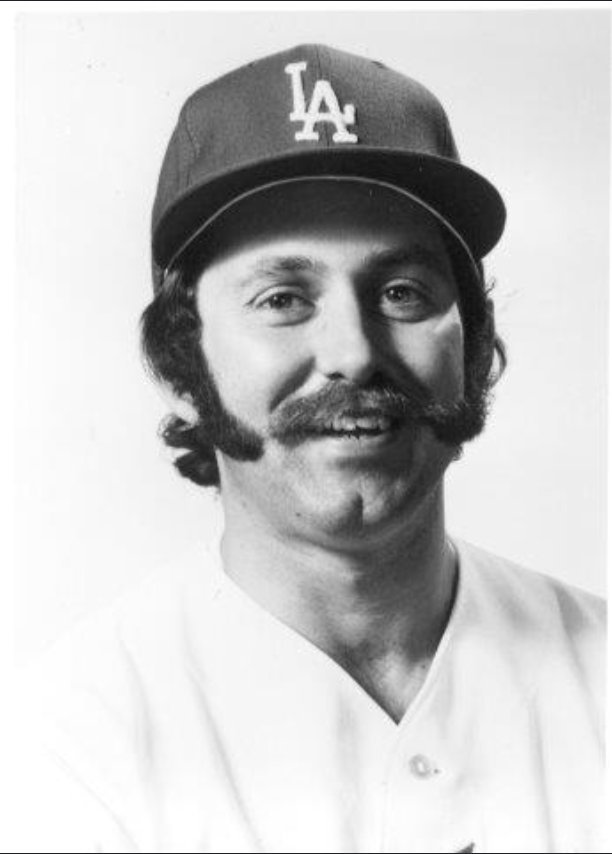
The Mike Marshall I am immortalizing in prose today is the Mike Marshall who won the Cy Young Award in 1974. From this moment forward, if I refer to Mike Marshall, I am referring to this Mike Marshall.

Check out this stat line: 15-12, 2.42 ERA, 21 SV, 208 IP, 106(!!) games pitched, ZERO starts.

These are video game numbers. I dream of a pitcher like this existing in 2024. For nerds, his WAR was 3.0, which wasn’t even his best single season WAR posting (that was in 1979, with the Angels, when he pitched in 90 games, saved 32, and went 10-15 at the age of 36).

All this is impressive, but not one of those stats are as impressive as his swarthy mustache and sideboards.

And yet, his mustache and boards are still not his most impressive accomplishment. While Marshall was an active pitcher in the Major Leagues, he completed his PHD at Michigan State. He became a doctor of kinesiology in 1978, while holding down an active roster spot on the Minnesota Twins. Doctor Marshall. Here is his dissertation.

Dr. Marshall would not sign autographs for children because he believed it encouraged them to admire the wrong sorts of people. Children should admire their teachers, not jocks. Dr. Marshall also served as a consultant (whatever that means) to Minnesota Vikings quarterback Fran Tarkenton.

After winning the Cy Young Award in 1974 (the first reliever to do so), Marshall was involved in one of the oddest sports trifectas that ever chanced to exist.

Marshall entered Game 2 of the 1974 World Series with a 3-0 lead. Modesto/Oakland A’s legend Joe Rudi singled into center field to score both of Dr. Marshall’s inherited runners, bringing the tying run to the plate in the form of reigning October hero Gene Tenace. Marshall struck him out.

Oakland manager Alvin Dark made a move to replace Rudi at first base with Herb Washington. Washington was a world-class college sprinter. Oakland owner Charlie O. Finley signed him to be a “designated runner”. Indeed, Washington played two full seasons in the major leagues and never had an at-bat. Finley had fantasies of Washington leading the world in stolen bases, but the man had never set foot on a baseball field prior to signing with the A’s. He stole 29 bases in 1974, but got caught 16 times. Washington had no instincts, Marshall had a Cy Young Award and a philosophy. Watch and listen, as Vin Scully expounds:

The trifecta of the moment was observed and expressed, to Washington, by Dodgers first baseman Steve Garvey. Marshall, Washington and Garvey were all Michigan State alumni. What Garvey may not have known, though, is that Washington and Marshall were at MSU at the same time, and Marshall was an adjunct professor for a kinesiology course in which Washington was a student.

A Doctor of Kinesiology with a Cy Young Award in his pocket. It’s mind-boggling that Dr. Marshall was never called upon to coach. He wanted to, but he was never the kind of guy to toot his own horn. Dr. Marshall’s reputation as a curmudgeon may have had something to do with his lack of job offers. He would not be cowed, he knew that he had the answers. After all, 106 games pitched should speak for itself. If we choose to look at Marshall’s stats through a modern lens, the question we must all ask is: how did Marshall turn his arm to rubber?

Dr. Marshall was eager to share with us, if we would just listen. No one would, so Dr. Marshall did exactly what the type of guy who gets his doctorate while playing baseball would do: he started his own school.

Get a load of these analytics, narrated by the doctor himself:

Dr. Marshall passed away in 2021. We may not intend to, but we will always honor his genius.

MAD props to Jason Turbow and his book, Dynastic, Bombastic, Fantastic: Reggie, Rollie, Catfish, and Charlie Finley’s Swingin’ A’s. Also, Bill Plaschke, Jeff Passan, Fangraphs, and Baseball Reference.

Brief Film Review – Licorice Pizza

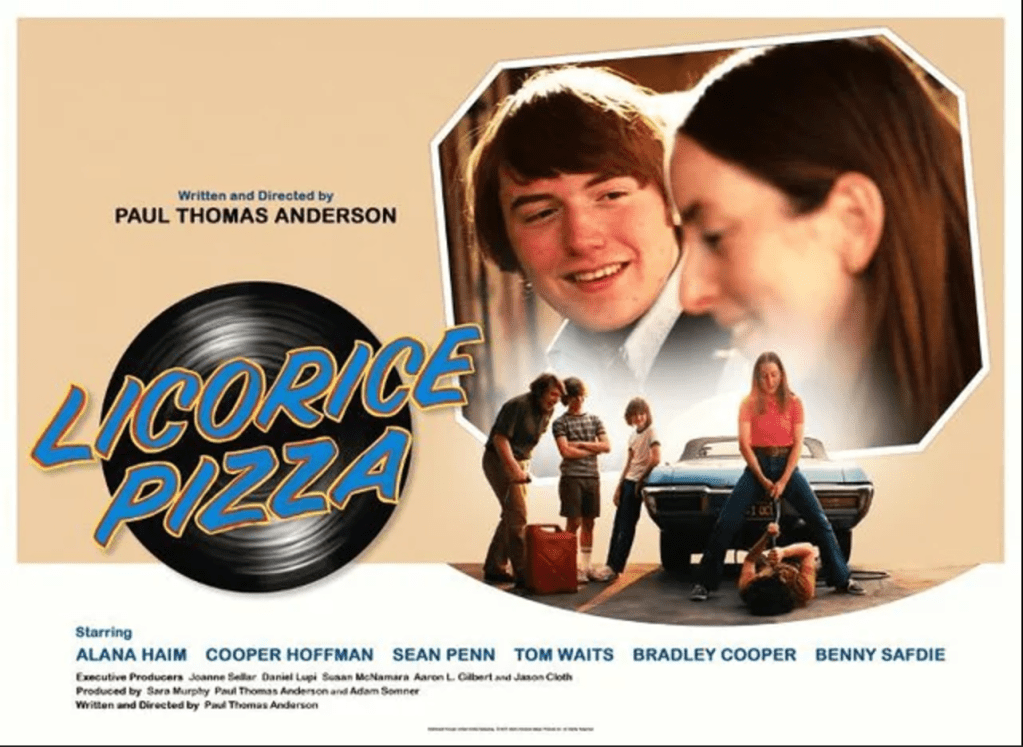
I like Paul Thomas Anderson films; at least I’m pretty sure I do. I like all the characters in this movie, particularly Alana Kane (Alana Haim). I was legitimately entertained. I’m not sure I liked this film, though.

Licorice Pizza unfolds almost episodically, although no hint is ever given that this is intentional. Protagonists Gary Valentine (Cooper Hoffman) and Alana Kane find themselves in one wacky predicament after the other, escape in a comedic way, and come back and do it again next week. The passage of time in this movie is almost irrelevant, except thats it ends up being crucial in its nebulousness during the final act. Like a TV sitcom, it’s never really explained how our characters get from one situation to the next. We just kind of accept it because we enjoy the characters. Trouble is, this is less acceptable in a narrative film. At least three times during the film, I wondered how everyone got where they were and filled in the blanks myself, with both timeline and story.

But…the characters are great. Gary seems off-putting at first, but he grew on me, at about the same rate that he grew on Alana. He’s a hustler, but not a charlatan. He’s a child actor, wealthy, but not born with a silver spoon in his mouth. He’s overconfident, like any 15 year-old would be, but also a try-hard. His ambition is not a turn-off, but an admirable quirk. Alana Kane is one of my favorite female characters I’ve seen in a while; she transforms from a sheltered, slightly insecure, rudderless homebody into the Hollywood Butterfly of cool indie chick who changes the boy for the better. She does this without ever being annoying, which is quite a feat when dealing with this particular trope. Not only was I rooting for her, she inspired a minor crush. Speaking of tropes, Anderson nails the Jewish family trope fairly accurately, without resorting to plucking the low hanging fruit (not a word of yiddish is spoken). The same cannot be said of John Michael Higgins’ Jerry Frick and his Japanese wives. Deeply unfunny, and recurring, at that? A bad choice that falls at the feet of the director. Bradley Cooper and Harriet Sansom Harris are scene-stealers during their “episodes”, and there are not many scenes in any film that are as epic and head-scratching as Sean Penn’s time on screen with Tom Waits. Two renaissance men, indeed.

All of this is true. There is some phenomenal stuff in this movie. I still felt dissatisfied at the end. The plot just isn’t much to get excited about. As fun as the characters are, they never face a situation that demands anything of them, so I didn’t feel very invested in them. Gary has no moment of self-reflection, and faces no adversity that money (which he has plenty of) can’t solve. The whole cast is fun to watch, but I didn’t really care about them.

Oh yeah, and that ending. Are we really meant to root for this? An odd choice. I get that it’s the 1970s. I realize things happened in the 1970s that are frowned upon now, and I even understand portraying things that 21st century sensibilities may be squeamish about in a film, but portraying it in a way that implies I should root for it? Flipping the genders around does not make it more acceptable.

Final score: 5.5 out of 10. I want to give it a 6, but that’s too close to 7.

Now, with Licorice Pizza under my belt, I have viewed the entirety of P.T. Anderson’s film library (not including his early short films like The Dirk Diggler Story). I considered him a favorite director for a long time. I adore Boogie Nights, Magnolia and Punch Drunk Love: absolute cinematic perfection. I’m less crazy about his other work, including a sacrilegious opinion on There Will Be Blood. I didn’t think much of The Master and couldn’t wait for Phantom Thread to end. Inherent Vice is on my list to rewatch, as I feel like I’m not remembering it accurately. Anderson is currently working on another film, due in August of 2025. I’ll watch it, of course. As of now, I’ll say this about PTA’s films: he could use an editor. Keep it to 90-100 minutes.

Brief Record Review – I Have A Physical Body That Can Be Harmed, by Thank

“I’ve got a sickness, it’s called being very handsome and a skillful lover with a good credit rating disease.” *

Punk rock has a knack for showing back up in your life exactly when you need it. If you grew up with even just one record from Sub Pop, SST, Epitaph, K, Alternative Tentacles, or Dischord (surely countless others, but these are mine), you know what I mean. Perhaps, you never let it go. It’s possible you’ve thought to yourself you’ve outgrown it, or your heart just isn’t in it any longer. With the recent nationwide, uniquely American unpleasantness fresh in my mind, I’d been spending the past week enraged, confused, and anxious to let off some kind of steam. I didn’t know exactly how to describe or express it, but I knew I needed someone to commiserate with me on a visceral level. Then, these lads from Leeds, England showed up in my life with some punk rock, exactly when I needed it. Thank is the band we all need.

I Have a Physical Body That Can Be Harmed (or IHAPBTCBH, going forward and for brevity’s sake) is perfect. It starts off with Control, which sounds like the Melvins’ “Hung Bunny/Roman Bird Dog” decided to share a room with Gary Numan and conceived Idles, or a very British Spencer Moody. Control spends the first three minutes building up to the last minute’s finale of absolute noise rock Valhalla. I really love this song.

The absolute idiocy of the Trump era has completely butchered satire. However, Thank pulls it off wonderfully in Woke Frasier. It isn’t necessarily witty, but it throws the kind of punches that are cathartic in their pettiness and vitriol. This is the song that made me realize how much I needed IHAPBTCBH and Thank:

Do It Badly is sound advice for the mediocre white boys of the world. A page out of the Vandals playbook, but instead of delivering it with a smirk, Thank delivers with a dark sneer.

Spores is a solid piece of stoner metal.

* The lyrics that appeared at the beginning of this screed are taken from Down With The Sickness. I hope that the people out there who are seeking out Godsmack accidentally find Thank, instead, and are forever enlightened.

Seriously, IHAPBTCBH is excellent. This one is gonna give Melt-Banana a run for their money as record of the year. I’m wearing this monster out. An absolutely perfect record for our moment.

Brief Review: Melt-Banana, 3+5

I’ll cut to the chase: I’m deeply obsessed with this record. Melt-Banana has been awesome for a long time, but this record has MxBx going way past just being awesome and seizing a throne. 3+5 is so heavy, so intense, that when I heard it blast through my Skullcandy headphones, I was forced to get up and pace around the room, grinning like a fool. I considered thrusting open the front door and bursting out onto the street, letting out a giant “bleeyargh!” and taking off running.

Songs should always be a very intense, very short, 3 minutes or less, or an epic 8 minutes or longer. This album takes the former approach, cramming 9 songs into 24 minutes. Honestly, this album could not have gone on another minute, the world would have been set ablaze and the listeners’ hearts would explode. I started it over again immediately. And then immediately again.

Melt-Banana has always been oppressive music, not in the same way Khanate is, but in the way I imagine a full aerial assault would be. They are on the attack, and you are the target. This time, the music is uplifting and victorious, and it is the best they’ve ever made. It’s still a full aerial assault, but this time, the band is on your side. It’s a rallying cry. If you can’t join up with Melt-Banana after this, you are dead inside.

3+5 is unquestionably my favorite album of 2024, and that’s saying something, because this year has experienced quite a renaissance of music that is weird, heavy, and cool. This might be my favorite record of the post-pandemic era, that is, this depressing decade of the 2020s. Get your ears deep into this.

Brief Review: Walking and Talking

Some 90’s ass s***.

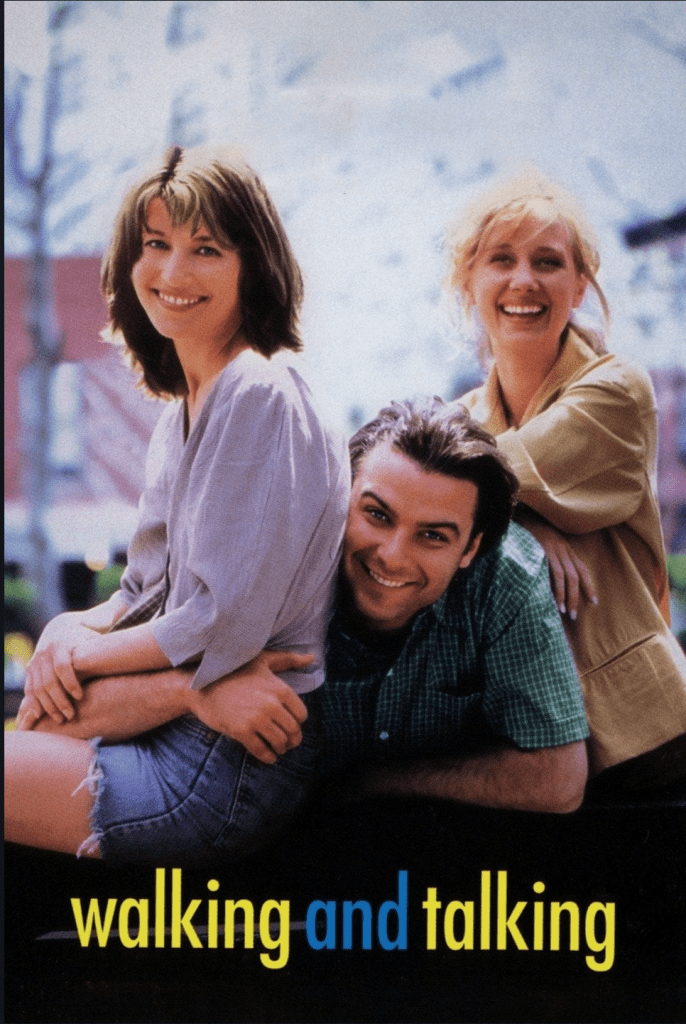
First of all, not a single person pictured on this movie poster (Catherine Keener, Liev Schreiber, and Anne Heche) resembles anything close to how they appear in the movie. When was this promo shot taken? When did Liev Schreiber ever have hair like Christian Slater? Are we sure that even is Anne Heche? This poster doesn’t represent the actors or the plot.

Not that there is much of a plot. That is, there isn’t really a reason for anything to happen. It’s not a bad thing, there just isn’t some tragedy that sets of a string of events that radically changes everyone’s life (with the exception of poor Mr. Jeans). You’re just sort of watching people exist. The first 10-20 minutes or so of this movie made me think about Clerks, and I’m sure there is an abundance of other quirky 90’s films made around this same time that carry the same people-watching vibe. Of course, it helps if the characters are interesting and/or likable. Were Amelia (Keener) or Laura (Heche) those things? Amelia more so than Laura, for sure, but that could be residuals from my crush on Keener in Being John Malkovich. Maxine Lund FTW.

Not that either of them are downright terrible. Amelia and Laura were life-long pals, and roommates until presumably very recently, when Laura moves out to be with her boyfriend, leaving Amelia and Mr. Jeans behind. Life happens, the two best friends sometimes take each other for granted, sometimes they keep secrets, or say things without thinking. That’s really the whole movie. Perfectly normal people (as normal as characters portrayed by the lovely Keener and Heche could be).

As for their male counterparts, Bill, played by Kevin Corrigan, is a magnificent human, and I was absolutely thrilled when things worked out differently for him than I expected. All the male characters in this film are puppy dogs, but the heartbreak they suffer isn’t inflicted upon them with malice or evil. Things like this just happen to you when you’re 20-something, fairly normal, and navigating dating. Who can’t relate to that?

There were three occasions in this film where I though for sure that these two ladies were about to break girl code, but it never happened. I guess that makes the film seem like a drag, but it really just made me root for them harder. I found myself liking each of them more as the film went on. Amelia was more interesting than Laura, I think because her arc is more fleshed out. Amelia and Andrew (Schreiber) are exes that have become genuine friends, but there is also a Rob Gordon/High Fidelity vibe between them. Amelia can’t figure out why Andrew broke up with her and why Bill won’t call her back, and those dilemmas were my favorite parts of the film.

Laura’s arc happens way too fast, and it doesn’t even start until halfway through the film. Once Laura gets engaged, her fiance seems to instantly start disliking her, and the disdain is mutual, but we never see what changes between them. They just start hating the same things they liked about each other before.

Spoiler alert: There is a happy ending.

Triple Brief Reviews

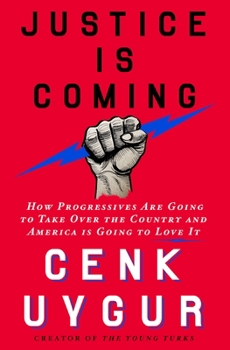
This person, me, reading this book, is like a member of the choir being preached to by his pastor. I’ve enjoyed The Young Turks (TYT) since the grainy, public access-y early days of Christian side hugs during the Bush era. I rode with author Cenk Uygur through his Al-Jazeera and MSNBC stints, I have volunteered for Wolf-pac.com (and I cannot encourage you enough to do the same, more on that momentarily), and I canvassed Modesto as a member of Alison Hartson’s campaign to unseat the odious Dianne Feinstein in 2016. I am steeped in TYT. I mention this only to demonstrate that I am absolutely biased towards the author of this book.

I wish I could get this book into the hands of the people who are not steeped in TYT and Cenk Uygur, the people who haven’t heard of him, or, even better, find him objectionable. Uygur’s explanation of media powers and motivation (spoiler: they aren’t objective reporters of truth), why Democrats have lost so much support in a country that is otherwise progressive, and where power actually lies (spoiler: not in the hands of marginalized demographics or immigrants) are undeniably persuasive and powerful. Uygur does not hide his disdain for right-wing MAGA thought, so it will be very hard to break through the cognitive dissonance happening with that 30% of the population, but it is not the media’s job to be neutral spectators. Rather, it is to call out injustice and speak truth to and about power. The feeling you have that something isn’t right, that we’re being hosed, is not unreasonable. You’re right; but don’t look down, don’t look across the table, look up. Who benefits from the status quo? Who has proven to be a fantastic return on investment for the oligarchs? What motivates corporations? Why does the media try so hard to malign policies that help people, or act like centrism is a politician’s highest virtue?

Wolf-pac.com

Get money out of politics and end legalized bribery. We are working to call a convention to amend the constitution to eliminate dark money and establish publicly-funded elections.

Brief Record Review: Kim Gordon, The Collective

Your humble narrator has been anticipating this one for quite some time. The dissolution of Sonic Youth is an absolute tragedy, but all the members have continued to soldier on individually, creating some of the best music of the 21st century. I haven’t decided if the notion that the old heads from SY are lapping the pack is a bad sign for where music is headed, but I’m also 44 years old, so the new stuff isn’t for me, anyhow.

Thurston Moore’s 2020 record Beyond the Fire was most similar to Sonic Youth’s catalog and one of the best albums I’ve ever heard (all his stuff is great, even if Demolished Thoughts makes me feel a little icky), Lee Ranaldo’s work is the weirdest, heaviest, acid-trippiest of the solo efforts (check out In Virus Times or his work with Mdou Moctar), and Kim Gordon has been on fire with Body/Head. As far as I know, this is her first “solo” work since the end of Sonic Youth, and it was worth the wait.

Kim Gordon’s contributions to Sonic Youth were dissonant lullabies, songs like “Bull in the Heather” and “Star Power” served as twinkling interludes between Ranaldo’s and Moore’s almost industrial assault. Her vocal delivery is equal parts coy whisper, children’s story time, and riot grrl wail. She’s unbelievably hip, fashionable, and everyone’s punk rock spiritual mother. So many badass ladies (Kat Bjelland, Kathleen Hanna, and Annie Clark, to name a few) have walked in her footsteps, but none have been as effortlessly cool.

This brings me to The Collective. Right off the bat, Gordon jumps out of the speakers (or even better, some decent, over-the-ear headphones) with “BYE BYE”, a mellow hip-hop song that somehow ends like “Pleasant Valley Sunday” without ever jerking you out of the vibe. I love this song, and would have absolutely worn it out in my “music for studying” playlist era. The whole record rows down this same river. “I Don’t Miss My Mind” seemed somehow familiar to me, like I’d heard it and loved it already, even though that is impossible. “Trophies” sounds like what would happen if Tune-Yards collaborated with King Buzzo for a song. I don’t know if I am personally capable of praising a track any more highly than that. “Shelf Warmer” had me nodding my head and making that angry metal face that you sometimes have to make when a track hits hard. Dude, it’s Kim Gordon. I love her.

Check out the music video for “BYE BYE”, starring Kim’s daughter, Coco. Then go to Bandcamp or a locally owned record shop and make the right decision:

Brief Film Review: When Evil Lurks

DOOD. That was one of the most harrowing movies I’ve watched in a long time.

You should know, this film was made in Argentina and is sub-titled in English. I was unaware of this going in (not sure how I didn’t know), and I almost talked myself out of watching it, but hooo whee, I am glad I chose to stick with it. In fact, I think the fact that it was made outside of the US is part of what made it so disturbing. Americans have some squeamish sensibilities, and maybe have come to expect certain storytelling devices or tropes. This film dispenses with those sensibilities and tropes in a hurry.

The first thing did as the credits rolled was turn to my wife and utter, “I think that movie was way better than Hereditary.”

Take a good look at that preview poster above. Then, go watch When Evil Lurks. Come back here after viewing it and see if you can look at that poster passively again.

Normally, I include the movie preview with my reviews here, but in this instance, I want you to go into the viewing with as little as possible prior knowledge or expectations. Just promise me you’ll watch it.

9/10

Until next time, lovely readers. Enjoy baseball season.

Brief Book Review: Sick City

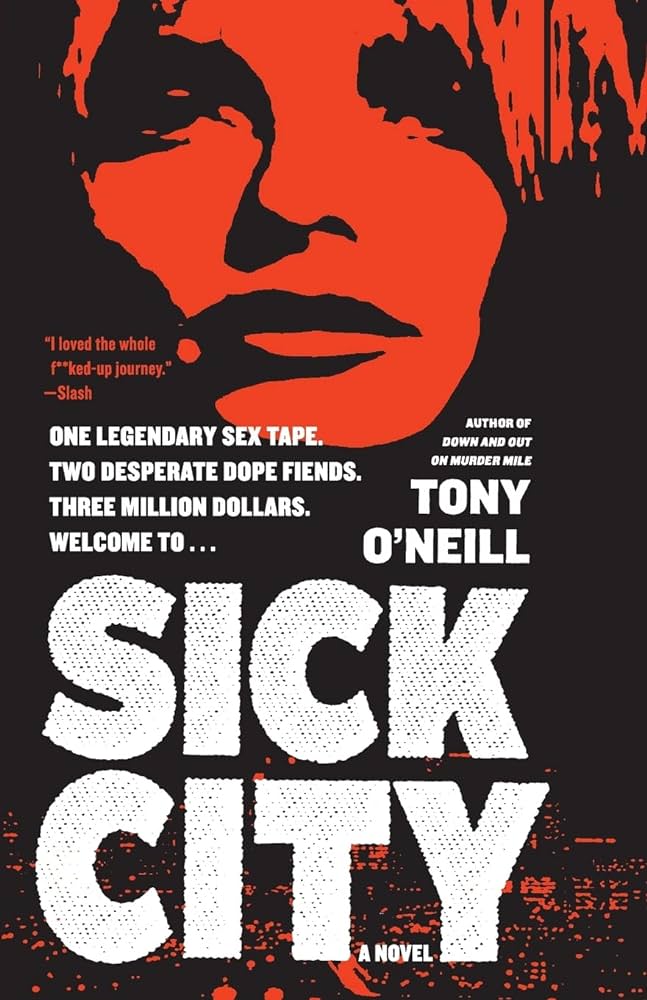
Television rehab doctors. Sex tapes of infamous murder victims. A dog named “Fuckface”. Junkies shooting meth into their jugulars. Napoleon Bonaparte.

In America, “whenever you make some money, there’d be a queue of bastards like Stevie lining up to take their goddamn cut. Usually they only had two things in common: they were already wealthy as shit and they had done nothing to earn their percentage.”

Author Tony O’Neill began his career in “art” creating music as a member of the Brian Jonestown Massacre. I put art in quotations because while this book certainly fits the bill, it just might lack all the socially redeeming qualities usually required to be called such. His first book was published in 2006, Sick City followed a few years later.

Not a single character in this book is “good”. Prostitutes (male and female), junkies, killers, pimps, and rich perverts. They are all very well-written, though, and this makes most of them somewhat sympathetic; particularly Jeffrey, who we meet first and is the common thread through which the narrative weaves. Jeffrey is a sad-sack junkie who lucks into possession of a forbidden Hollywood totem, and convinces Randal, his privileged rehab roommate to help him sell it.

Very quickly, I was struck by how cinematic this book was, unfolding the way Tarantino’s Pulp Fiction did before it, although this one is also filtered through Boogie Nights, as if they were both written by Elmore Leonard or William Burroughs. In fact, Sick City is very much pulp fiction by the pre-Tarantino definition. It would not shock me at all if this book was adapted to film in the future.

O’Neill enhances the story by using real Los Angeles locales. Parts take place at the seedy Mark Twain on Wilcox, and the Hotel Cecil looms in the distance. Jeffrey haunts real streets and restaurants from Los Angeles, and it cast a spell on me. I’m not an native Angeleno or even a modern transplant, but I’ve long been fascinated with the strange, ancient, dark magic that permeates Los Angeles (particularly Hollywood), and O’Neill delivers by placing his story in the genuine middle of it. Smoky bars, flophouses, and venues of questionable taste, all real, or very closely based on a real place. I’m sure that Dr. Mike’s made-for-tv rehab mansion is not an actual place, but if you’ve seen Dr. Drew’s regrettable, real life show, you know exactly where these people are. I found myself using Google maps to look up street corners and addresses, and each one I looked up passed the muster. A very cool detail, and it made the story drip with vibes.

Sick City is a portrait of Dorian Gray: every beautiful, glittering starlet has a downtrodden counterpart. We only help each other because it makes us feel good about ourselves. We can talk ourselves into doing heinous things if we stand to gain from it. We grieve endings because we’ll miss those nostalgic hits of dopamine, or sometimes anger, that made us feel important. There is a little bit of Jeffery in all of us, and we are all intertwined.

8/10. Check it out