
On August 2, 2024 Aerosmith announced they would retire from touring, due to an irreparable vocal cord injury sustained by one Steven Tallarico. The ensuing year saw Aerosmith’s shambolic reputation restored with the power of hindsight, and a triumphant, albeit appropriately brief, return to the stage on July 5. During that evening’s Black Sabbath tribute concert, Tallarico roared through Led Zeppelin covers for an appreciative crowd, received glowing reviews and got to bask in one final spotlight. Like so many things Aerosmith (and Tallarico) have had throughout the years, it fell short of what they deserved (a farewell tour and mass adulation from their most rabid of fans), but was, at least, a fond farewell and a moment of glory for the much-maligned and self-inflicted-wounded band. Tallarico got to go out on top.
I sat down to write this diatribe as the beginning of a sort of series of tributes to the band, going back through their catalog and praising the Boston quintet for their (mostly) underrated and enduring contribution to the world’s greatest art form, rock n’ roll music. I cracked my knuckles, then navigated swiftly to Aerosmith’s Apple Music page. That’s when I saw this:

Wait, what? They just so happened, on the day that I intended to do my level best to enshrine them as Mt. Rushmore of Rock figures, to release a preview for a new EP, co-performed with YUNGBLUD (who I admittedly do not recognize at all), in 2025? At first, I thought I had clicked on the wrong artist by mistake. I gave myself a moment to absorb what I was seeing. Was it real? Maybe it was just a remix of some old Aerosmith music, highly skippable and largely inconsequential? My Only Angel. Maybe some 2025 remix of the most triumphant of power ballads from 1987’s Permanent Vacation? I had to know. It’s probably nothing, but of course, I listened to it immediately. Goddamit, Tallarico. Here comes Steven Tyler.
It’s new material. It’s awful. It’s auto-tuned and embarrassing.
Be that as it may, I am not new to this art of Aerosmith apologetics. Despite the band’s own best efforts to embarrass and demean themselves, I will not be swayed. I intend to carry on with my planned tribute, and I intend also to never hear My Only Angel ever again. I carry on in the hopes that, after November 21, 2025, Aerosmith makes no further efforts to… I guess.. revitalize their image, and will let this (which they are certain to read) stand as the absolute love letter I originally intended it to be. To put it bluntly: please, do not perform that new song live. Ever.
Now, as Steven Tyler would say: Good evening, people, welcome to the show…
I will not be including compilations in this career retrospective. Still, I will probably mention the outtakes contained on those compilations as songs that stand alongside the music that was included on albums, or as suggestions of what Aerosmith could have included instead of what they chose to include. Still, if I actually wrote a record review for every single iteration of Greatest Hits that the band released, I’d be practicing a demonic level of redundancy.
Aerosmith – January 5, 1973
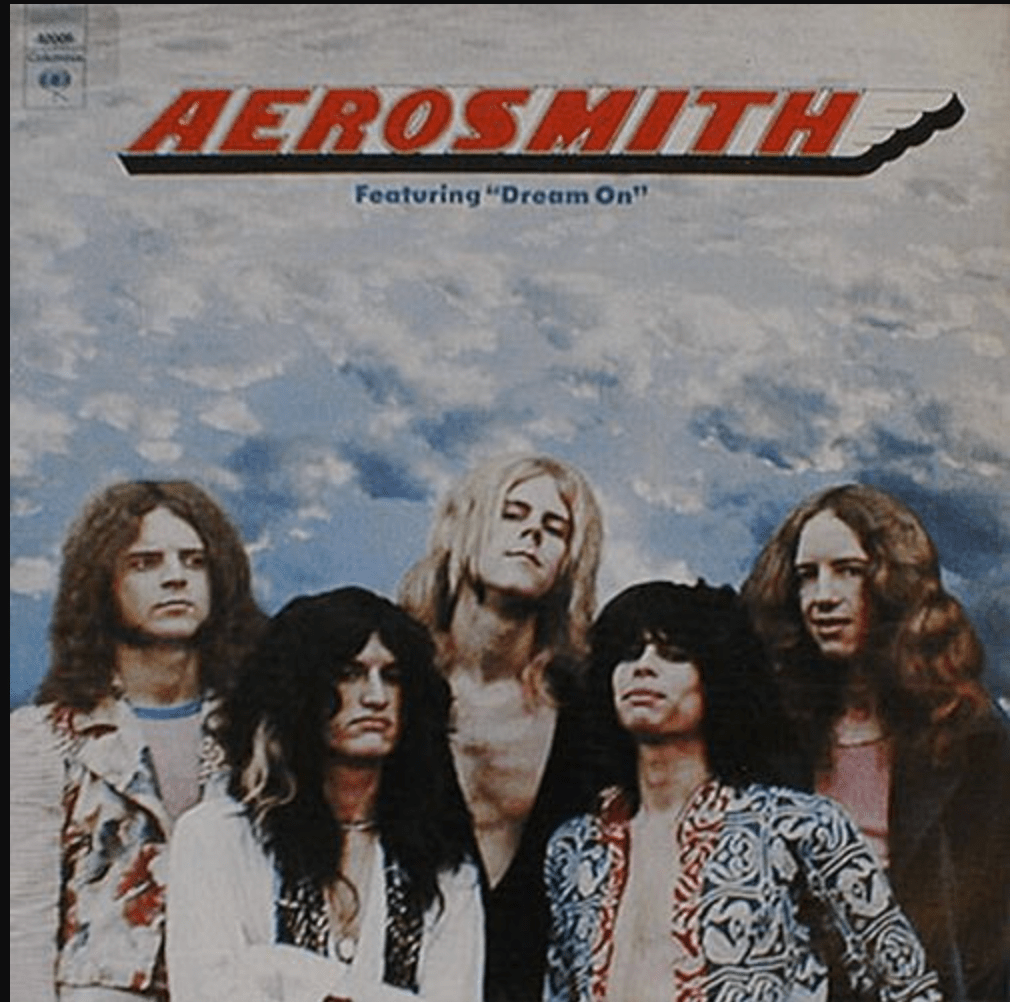
Take a long, lingering look at that album cover. For the next decade of Aerosmith’s existence, this would be as bright and colorful as things would get. This is the photo of a band in their “fake it ’til you make it” era. It isn’t hard to understand why music critics at the time wrote the band off as second-rate Rolling Stones rip-offs; it was low-hanging fruit to attack Steven Tyler’s lips and Joe Perry’s disheveled indifference, but aesthetics aside, the critics (as they almost always do) missed the point.
Aerosmith was never anointed in the way The Beatles, Stones, or Led Zeppelin were. It is true that the press also savaged Led Zeppelin, but Zeppelin had the privilege of containing hip and already well-known members. The press levied at Led Zeppelin didn’t matter. Aerosmith spent 2 years bashing these songs out as unknowns in Boston’s Orpheum Theater, absolutely a garage band in every sense of the word, with the exception of the fact that they couldn’t afford a garage. A decent write-up might have helped Aerosmith considerably, although it ultimately turned out that Aerosmith did not need the press’ help. This music is not for the hip London swingers, it’s for the kids.
I don’t think I could describe the vibe on Aerosmith better than Dan DeWitt, who reviewed the record for Creem Magazine, back in ’73: “We all had to suck somebody’s tit, and what a bunch of tits these chubby-lipped delinquents have gone after.”
The record is raw in a way the band would never recapture, and Steven Tyler’s voice is intentionally nasally. In his autobiography, Tyler mentions that he did like the way his natural voice sounded, so he adopted this affect for the recording of his debut album. If you’ve heard “Dream On”, you know precisely what I’m talking about. I tend to believe that the rawness of this album went the way of Steven Tyler’s vocal affect because Aerosmith were too ambitious to not find a way to be grandiose in the future. I’ve got no beef with grandiose, why would I be an Aerosmith fan otherwise, but I wish more of this vibe and sound permeated more of Aerosmith’s later catalog.
“Make It” is the opener and the grungiest track on the record. Producer Adrian Barber correctly puts Joey Kramer’s drums up front and thunderous, and the lyrics are basically the narration of the photo on the cover. “Make it, don’t break it, if you do it’ll feel like the world’s coming down on you… You know that history repeats itself, what you’ve just done, so has somebody else.” Aerosmith is not trying to innovate; they are just smashing out some music. I do not know why the group chose to sandwich “Somebody” onto the record in between this magnificent song and “Dream On” (I would have chosen “Major Barbra”, an outtake that later appeared, oddly, as a studio track smack-dab in the middle of Live Classics!), but it is likely due to Tyler’s presumed affection for the song, as it was originally written and performed by Chain Reaction, his first group.
“Dream On” stands as Aerosmith’s magnum opus. In 2025, it is absolutely overplayed, Aerosmith’s Stairway to Heaven (as in, should be forbidden in guitar shops), but if you can bring yourself to remember the first time you heard it, it is jaw-droppingly great. Likely, you didn’t realize it was Aerosmith (due to Tyler’s vocal affect and the fact that you almost definitely heard “Walk This Way” first).
“One Way Street” is fine, another ode to the struggle of trying to make it as a band. Actually, it’s kind of odd how many of the songs on this record are about Aerosmith’s drive to become rock stars, and how dirty and nasty the work is. The band, particularly Tyler, has always understood that if you pretend to be something long enough, you become that thing, and they have always ran at full speed towards being grand rock stars, so the confession that they are not is unique and fleeting.
“Mama Kin” was so beloved by the group that Steven Tyler got it tattooed on his arm, and was so beloved by others that none less than Guns N’ Roses covered it 10 years later, and it’s a solid slab of hard rock, but nothing particularly unique in 1973.
“Write Me A Letter” sounds like a Joe Perry riff, but it is not. “Movin’ Out” is a Joe Perry riff, the first that he contributed to Aerosmith, and his sole writing credit on the record. Yet another lyrical ode to the struggle of a fledgling band, “Movin’ Out” stands above the other similarly-themed songs because of the middle breakdown (“level with God and you’re in tune with the universe, talk with yourself and you’ll hear what you wanna know”) and Joe Perry’s inimitable style. The song stands as a contender, for me, of Top 10 favorite Aerosmith songs.
The record closes with a cover of Rufus Thomas’ “Walkin’ the Dog”, although honestly, the version found here is probably a cover of the Yardbirds’ cover. Aerosmith has certainly never shied away from wearing their influences on their sleeves (…”what a bunch of tits these chubby-lipped delinquents have gone after.”), and none so egregiously as the Yardbirds.
Best Songs:
- Dream On
- Movin’ Out
- Make It
I’d give this record a strong 7/10. It’s a blueprint for a very solid rock band, but oddly, not a blueprint for what Aerosmith became. There are some stone-cold classics on this record, and I really love the production (Kramer’s drums haven’t sounded this mighty ever since, in my view). What is oddly missing, for such a raw production, is the glam and grunge that Aerosmith combined to perfection in the ensuing years. Only the New York Dolls (who coincidentally, shared a management team with Aerosmith) could come close to mustering up the sort of whiskey-soaked, cocaine-fueled glitterati bait that the Boston quintet was conjuring up next.
Below: the aforementioned outtake, “Major Barbra”, as it sounded during rehearsals for the record, and the album version of Joe Perry’s first collaboration with Steven Tyler, “Movin’ Out”.



 A Fool Speaks Loudest